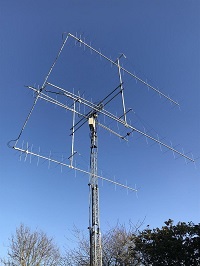
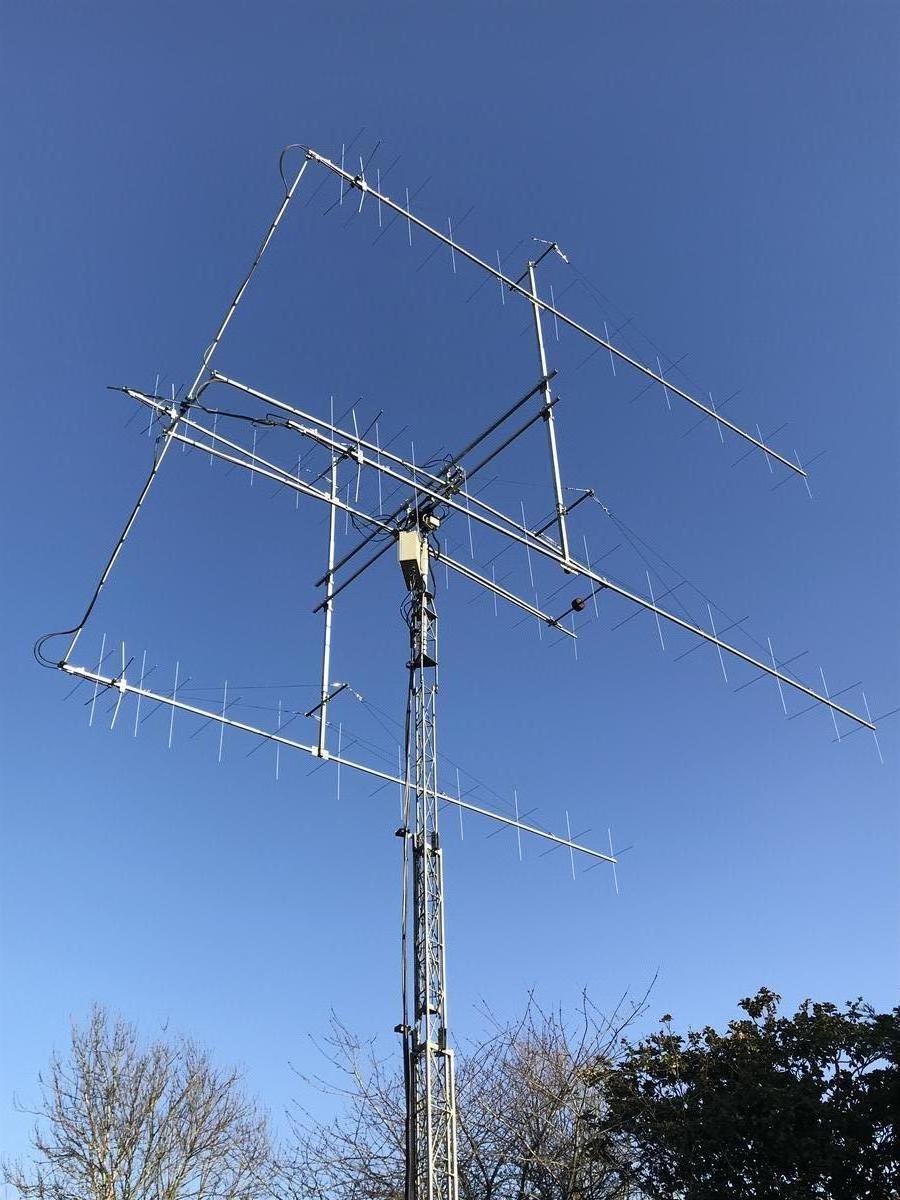
On my 2m EME array the dipoles on the DG7YBN design GTV 2-12n XPOL Yagis are fed via quarter wave balancing lines made up from Andrew Heliax LDF4-50A. These lines are constructed using similar methods described on the DG7YBN web site - A serious QRO Quarterwave Line and have been in use since July 2020.
I recently worked KS but still need the following states to complete WAS on 144MHz EME - NV, OK and VT. If you're active in any of these states, or know of anyone who has 2m EME capability please contact me via the email address on my QRZ.COM page to arrange a sked.
Having been involved in software development for most of my career I wanted to use a toolchain that that was lightweight and low cost to build my own website. After some research I chose Hugo as the static site generator, Amazon S3 as the hosting service and GitHub as the repository for site customisations and content.
I spent a couple of hours getting Hugo, Amazon S3 and GitHub setup using the comprehensive documentation and examples found on their respective websites. In addition, I found the following pages extremely useful:
There are many internet resources that cover digital signal processing (DSP) and software defined radio (SDR), but I’ve only found a few that provide a good introduction along with practical examples. Software Defined Radio for the Radio Amateur by AC2CZ (G0KLA) is an excellent set of SDR tutorials which I found particularly useful. The sample code is written in Java, but it was fairly straightforward to rewrite the parts that I wanted in C++ using Qt.
In 2020 I took up CW again after many years and successfully completed the CWOps CW Academy Basic Course in March 2021.
In May 2021 I successfully completed the CWA Intermediate Course and now enjoy making regular CW QSO’s. You will hear me mainly on 40m and I occasionally take part in the K1USN SST and CWops Tests (CWT). I am also a member of the Long Island CW Club, a club dedicated to teaching Morse Code to beginners and helping to improve the skills of intermediate and advanced operators.
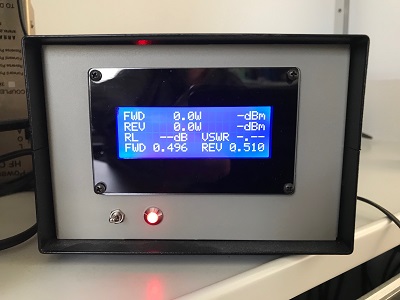
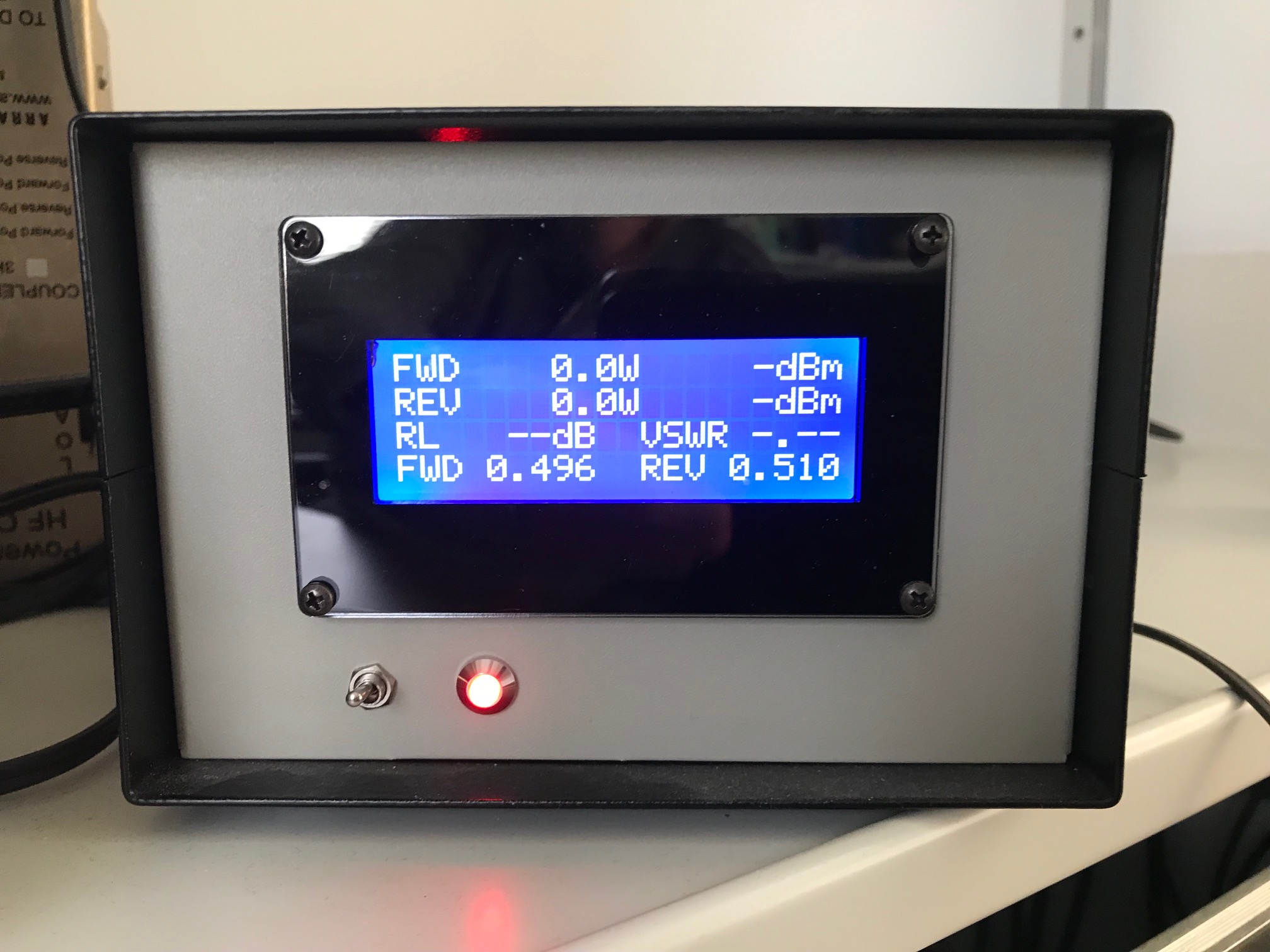
In May 2017 I built a simple RF Power Meter using a AD8313 rf power detector module from SV1AFN, an Arduino Nano and a LCD module. The meter was battery powered and it was calibrated for use at 144MHz using the output of my HF to 2m transverter via some variable attenuators. The meter worked well, either with an external attenuator or a directional coupler.
Elecraft announced the K4 transceiver in May 2019 and I saw the radio at Ham Radio, Friedrichshafen in June 2019. I placed an order for a K4D (with an optional K4HD should I need it), in July 2019. Units started shipping in November 2020, maybe delivery will be Q1 2021?
I recently installed a second-hand Radio Structures BM10T lattice mast for my 2m EME array. The BM10T is similar to a Versatower but has a simpler luffing arrangement with the wire attached to the bottom of the lattice section and running through two pulleys either side of the base post and up to the winch. The pulleys simply act as guides for the wire and provide no mechanical advantage. This makes luffing hard work with the antennas installed.